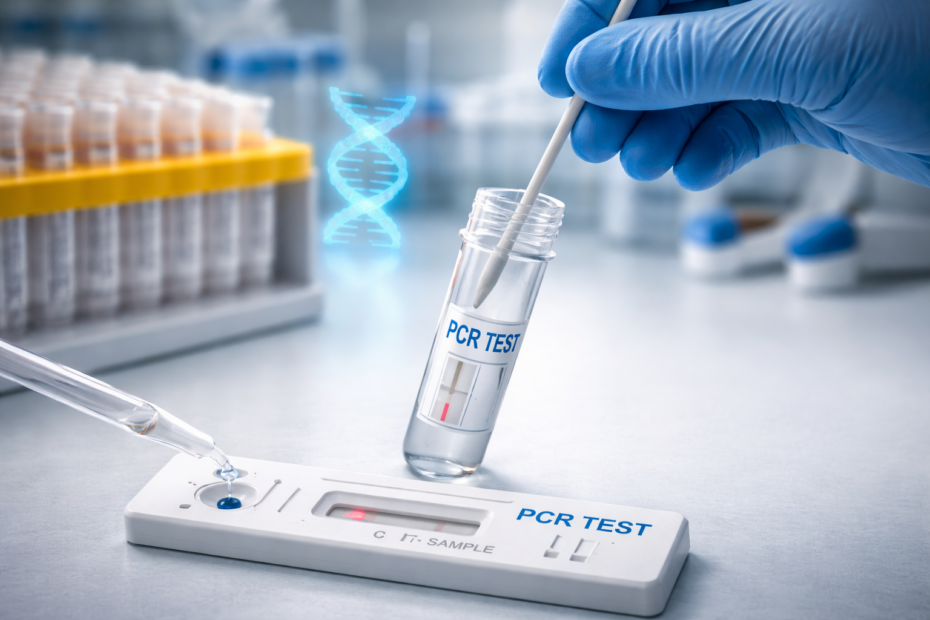
UriFastBK aims to bring BK virus screening closer to the patient, so that monitoring can be more frequent and more responsive after kidney transplantation — alongside PCR, not instead of it.
The problem: PCR is reliable, but not always actionable fast enough
Reactivation of BK polyomavirus (BKPyV) is a major issue after kidney transplantation. It can progress to BK virus-associated nephropathy and threaten graft function, which is why modern strategies emphasise regular monitoring during the early post-transplant period, when risk is highest.
In practice, screening relies overwhelmingly on PCR of urine and/or blood. It works, but it is operationally heavy:
- a full chain of steps: collection, transport, extraction, amplification, validation;
- dedicated instruments and trained staff;
- samples often processed in batches, which can delay clinical response;
- and in practice many tests come back negative, which consumes laboratory capacity for no clinical gain.
PCR remains the reference method — quantitative, traceable to the WHO international standard, embedded in laboratory routine. But its weight limits how often surveillance can realistically be performed.
The idea behind UriFastBK
UriFastBK is a rapid urinary lateral flow assay designed to detect viral particles in urine using an antibody directed against VP1, the major capsid protein of BK polyomavirus. The assay has been characterised against VP1 pentamers representing all four BKPyV genotypes.
The central objective is to simplify the test so that monitoring can happen more often, detecting viral replication earlier and allowing the clinical team to act sooner where protocols call for it.
What “without a PCR platform” changes in a care pathway
Faster decisions closer to the patient
Instead of the collect → laboratory → result sequence, UriFastBK targets a model where the clinician obtains a replication status directly from a urine sample, enabling an earlier clinical conversation: closer surveillance, confirmatory testing, or a change of strategy.
Reserving PCR for the cases that need it
The logical role for a lateral flow assay here is triage:
- Negative — continue routine follow-up according to local protocol.
- Positive or equivocal — confirm by quantitative PCR before any therapeutic decision.
This reduces pressure on molecular laboratories while shortening clinical response times. It does not set rapid testing against PCR; it makes them complementary. The evidence behind this two-stage logic is set out on our page on viruria versus viremia.
More screening, at the right moment
Disease progression typically involves urinary detection before any viremia appears. An accessible urinary tool therefore makes it possible to intensify surveillance exactly when it matters: early post-transplant, after immunosuppression adjustments, or when other biological signals appear.
Expected benefits
- better use of laboratory resources;
- a smoother, more responsive follow-up pathway for the patient;
- higher monitoring frequency without proportionally higher cost;
- a contribution to reducing complications through earlier detection.
Limitations worth stating
- a rapid test does not replace PCR in every situation;
- PCR provides quantification — a viral load — which a qualitative antigen test does not;
- clinical decisions remain entirely with the transplant team.
Published analytical and clinical results are detailed on the UriFastBK data page.
Frequently asked questions
How does UriFastBK work?
As a urinary lateral flow assay using an anti-VP1 antibody to capture and detect viral particles present in urine.
How does it speed up screening without a PCR platform?
By avoiding the full molecular chain — instrument capacity, batched runs, turnaround time — and delivering a result directly from a urine sample.
How would it fit into a care pathway?
The common scenario is more frequent screening by rapid test, followed by confirmatory quantitative PCR when needed: a positive or equivocal result, or a high-risk context, according to local protocols.
Where does SPyDiag fit in?
SPyDiag develops UriFastBK for rapid urinary diagnosis and BKNeutrol, an immunotherapy programme, both aimed at improving the management of BK virus after kidney transplantation.
Informational content. It does not replace medical advice. Management depends on the clinical context and on the protocols of the transplant team.